Photography — SG-ID-001
Stitt Gallery · SG-ID-001 · Bali, Indonesia 🇮🇩
The Piece
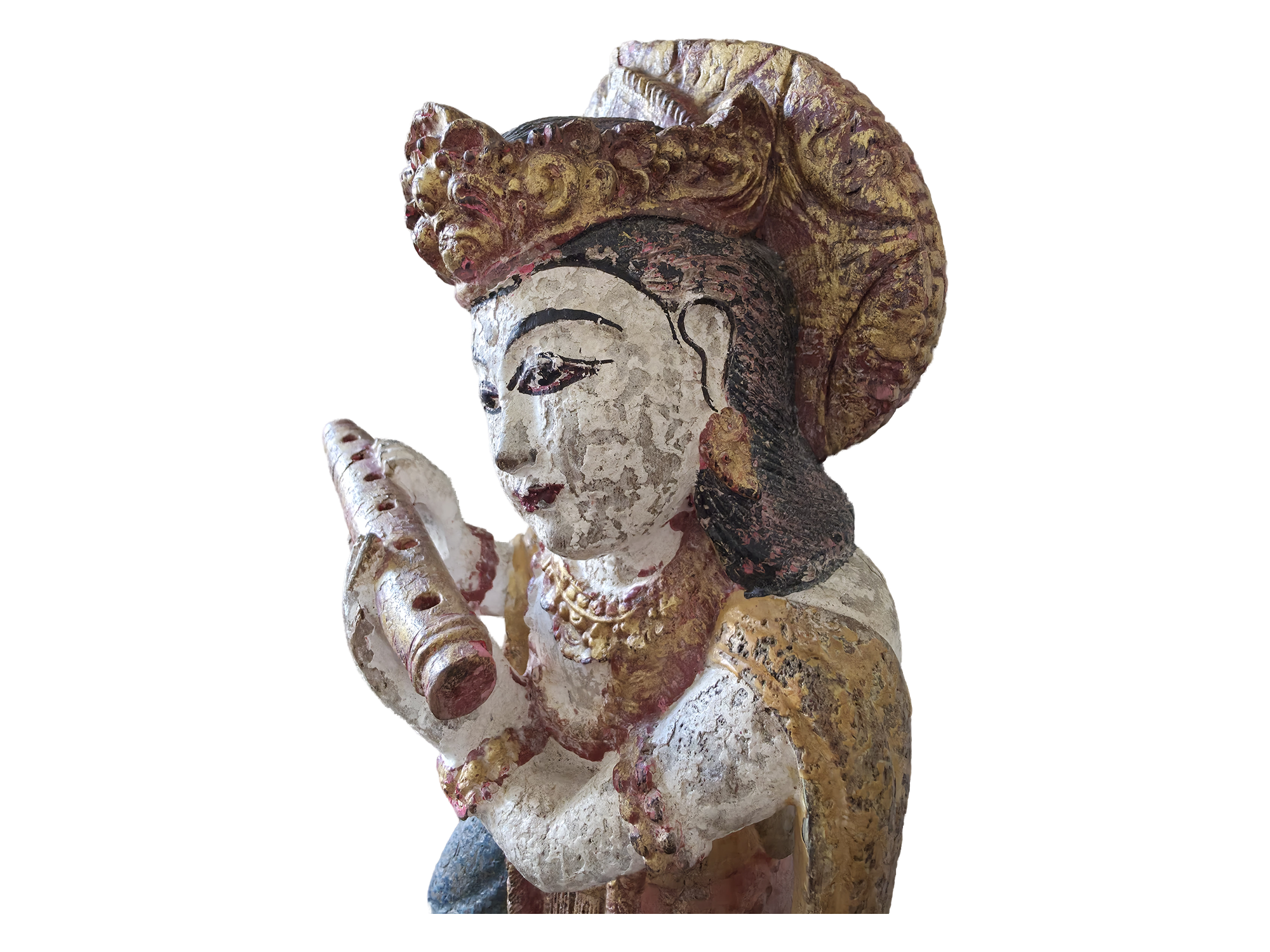
A rare Balinese carving of Krishna Venugopala — Krishna in his most beloved incarnation as the Divine Flutist. Carved from exotic solid wood and finished in wax polychrome with gilding, this is a rare example of post-war Balinese sacred art — the Balinese school of the 1960s combining Hindu spirituality with a precision of detail that marks the finest examples.
The figure is presented in the Tribhanga pose — the classical triple-bend of crossed legs, tilted hips and turned head that is the canonical representation of Krishna's grace. The flute is held to the lips. The lotus flower base signifies purity and spiritual rebirth. The crown and garments carry intricate carved detail consistent with the finest Balinese workshop production of the period.
Condition is excellent: the wax polychrome is stable, the noble patina of time is present — a non-greasy wax finish that has preserved the colour and surface detail. The presence of Krishna playing the flute is believed in the Vedic tradition to bring joy, calm and good energy to the home.
Specifications
| Subject | Krishna Venugopala The Divine Flutist |
| School | Balinese, 1960s |
| Height | 50 cm |
| Width | 29 cm |
| Depth | 15 cm |
| Material | Exotic solid wood |
| Technique | Wax polychrome with gilding |
| Pose | Tribhanga — triple bend Crossed legs, hips, turned head |
| Base | Lotus flower |
| Condition | Excellent — stable patina, non-greasy wax finish |
| Origin | Bali, Indonesia 🇮🇩 |
| Gallery ref | SG-ID-001 |
Photography — SG-ID-001
Iconography & Symbolism
Venugopala is Krishna as the Divine Flutist — the form most beloved by collectors and devotees. The sound of the flute calls souls to harmony and awakening. It is among the most represented subjects in Hindu sacred art across all traditions.
The Tribhanga is the classical triple-bend posture — a simultaneous deflection of the legs, hips and head that creates the characteristic S-curve of Krishna's stance. It is the canonical representation of divine grace in the Vaishnava tradition.
The lotus (padma) base is a universal symbol of purity, spiritual rebirth and inner balance. The flower rises from muddy water untouched — a metaphor for the soul's journey toward enlightenment. Its presence underlines the sacred character of the image.
The Balinese school of the 1960s combines the Hindu-Buddhist spiritual tradition of Bali with a precision of carved detail developed over centuries. This style — intricate crown, elaborate garment, expressive face — is the high-water mark of Balinese sacred carving.
The wax polychrome technique produces a surface that ages with exceptional stability. The colours remain vivid without yellowing or flaking. The noble patina visible on this piece represents decades of careful preservation of a non-greasy, well-maintained finish.
The presence of Krishna Venugopala in a home is traditionally associated with joy, calm and good energy. As a purely aesthetic object it provides strong sculptural presence — vivid colour, dynamic form — that works against dark lacquered furniture or pale interiors.
This piece forms part of our collection of European and Asian antiques available at Stitt Gallery, Poznań.
€408
This piece is available for private sale. We welcome enquiries from collectors, interior specialists and institutions. Viewing by appointment in Poznań. Shipping to Europe and internationally arranged on request.
Secure online payment via Stripe · card · Google Pay
Gallery reference: SG-ID-001 · stittgallery.com
Continue browsing